




Batana oil has become one of the most talked-about traditional oils in natural hair and skin care—but its story goes far deeper than current trends. To truly understand what is batana oil, you need to look at its cultural roots, botanical origins, and the careful, time-honoured methods used to produce it.
Used for centuries by Indigenous communities in Central America, batana oil is valued for its ability to strengthen hair, protect the scalp, and restore moisture in harsh climates. This guide explores what is batana, where does batana oil come from, what is batana oil made of, and how to make batana oil, while connecting traditional knowledge with modern formulations.

What Is Batana Oil?
Batana oil is a deeply nourishing oil extracted from the kernel of the American palm tree. Unlike highly refined commercial oils, batana oil is traditionally handmade and minimally processed, allowing it to retain its natural antioxidants, fatty acids, and vitamins.
Batana oil is especially known for its impact on hair health. Historically, it has been used to protect hair from dryness, environmental stress, and breakage, helping maintain strength and shine over time. Its earthy aroma and rich texture are signatures of its traditional preparation.
For a deeper exploration of batana oil’s functional benefits for both hair and skin, we’ve broken down how and why batana oil aids hair strength in this blog.
What Is Batana? Cultural Significance & History
To fully answer what is batana, it’s important to understand that batana refers not only to the oil itself, but also to the traditional knowledge surrounding its production and use. Among the Miskito people of Honduras, batana oil has long been a staple for hair maintenance, skin protection, and overall grooming.
Rather than being extracted for mass production, batana oil was historically made in small batches and shared within communities. This cultural heritage is one reason why batana oil from Honduras is still considered the most authentic and effective.
Where Does Batana Oil Come From?
When considering where does batana oil come from, the answer is both geographic and environmental. Batana oil originates primarily from the Caribbean coastal regions of Honduras, where the American palm grows naturally.
Batana oil from Honduras benefits from the region’s warm climate, nutrient-rich soil, and traditional harvesting practices. These conditions allow the oil to develop its distinctive =color, aroma, and nutrient profile, qualities that are often diminished in oils produced outside this region or refined too heavily.
The Batana Tree and Its Natural Ecosystem
Batana Tree
The batana tree (Elaeis oleifera) is a species of palm native to Central and South America. It differs from African oil palm varieties in both composition and growth pattern, producing fruit that yields an oil with a unique balance of fatty acids and antioxidants.
The batana tree grows slowly and produces fruit seasonally, which naturally limits large-scale production. This is one reason authentic batana oil remains relatively rare and highly valued.
Batana Flower
The batana flower plays an essential role in the lifecycle of the batana tree. While the flower itself isn’t used directly in oil extraction, it enables pollination and fruit development, which ultimately determines oil yield and quality.
Healthy batana flowers are a sign of a thriving palm ecosystem, reinforcing why sustainable harvesting practices are critical to preserving batana oil traditions.

What Is Batana Oil Made Of?
Understanding what is batana oil made of helps explain its effectiveness. Batana oil contains a naturally occurring blend of:
- Tocopherols and tocotrienols (Vitamin E compounds)
- Omega-6 linoleic acid
- Phytosterols
- Carotenoids
- Emollient fatty acids that support moisture retention
These components contribute to batana oil’s ability to nourish the scalp, strengthen hair fibers, and protect against environmental stressors like UV exposure and pollution.
Because batana oil is traditionally unrefined or only lightly filtered, these compounds remain intact—often resulting in a semi-solid texture at room temperature that melts when warmed.
How to Make Batana Oil Using Traditional Methods
The process behind how to make batana oil is slow, deliberate, and labour-intensive. Traditional production methods are designed to preserve the oil’s nutritional integrity rather than maximise yield.
The traditional steps include:
- Harvesting ripe fruit from the batana tree
- Roasting or cooking the kernels to release oils
- Grinding the kernels into a thick paste
- Gently heating the paste until oil separates
- Skimming and lightly filtering the oil by hand
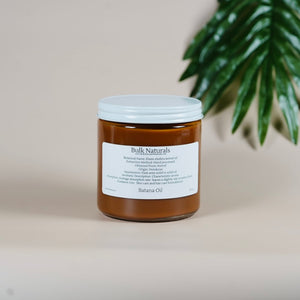
This method explains batana oil’s smoky, nutty aroma and deep brown colour—both indicators of traditional preparation rather than refinement.
Minimally filtered and raw versions of batana oil still reflect this process, including bulk formats that may retain natural sediment, such as traditionally produced batana oil sourced directly from Honduras.
Batana Oil in Modern Haircare Formulations
As awareness of traditional oils grows, batana oil has been incorporated into modern haircare products designed to support daily maintenance. Leave-in conditioners, for example, often use batana oil alongside aloe vera, shea butter, and chebe oil to help lock in moisture, reduce breakage, and support hair resilience throughout the day.
In these formulations, batana oil works as a strengthening and protective ingredient rather than a heavy coating oil, making it suitable for dry, curly, or damaged hair types when properly balanced. An example of this approach can be seen in batana-infused leave-in conditioning formulas that focus on hydration and strand support.
Batana oil is also commonly paired with cleansing agents in strengthening shampoos, where it helps support scalp comfort while minimizing moisture loss during washing. This balance is particularly helpful for hair exposed to frequent styling or environmental stress.

Pure and Unrefined Batana Oil
For those interested in experiencing batana oil in its most traditional form, pure and unrefined options remain the closest representation of ancestral batana. These oils are typically hand-extracted in small batches and sourced directly from Honduras, retaining their natural aroma, colour, and texture.
Pure batana oil is often used as a scalp treatment, hair mask, or skin emollient due to its dense nutrient profile. A clear example of this traditional format is unrefined batana oil that preserves the oil exactly as it has been used for generations.
Why Batana Oil from Honduras Matters
When asking where does batana oil come from, the distinction of origin matters. Batana oil from Honduras reflects not just geography, but tradition, climate, and technique. Oils produced outside this region or heavily refined may lack the depth, aroma, and nutrient density associated with authentic batana.

Leave a comment